

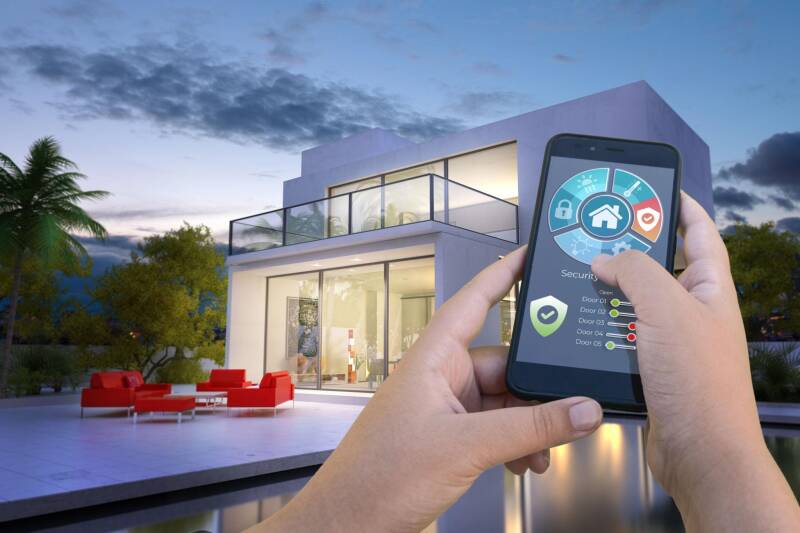
Security in luxury residences has traditionally focused on gates, cameras, alarms and physical access.
Today, the perimeter has changed.
Modern estates contain connected lighting, climate control, security cameras, access systems, entertainment networks and countless personal devices.
At the same time, staff and suppliers exchange sensitive information digitally.
The private estate has become a digital environment, making cybersecurity and privacy an integral part of modern property management.
1. The Estate Has a Digital Perimeter
Every connected device creates another potential access point.
Smart TVs, cameras, routers, home automation systems and remote maintenance connections may all interact with the property's network.
Managing these systems therefore requires the same discipline applied to physical security.
2. Privacy Extends Beyond Technology
Digital risk is not limited to hacking.
Operational information may include owner schedules, travel plans, property documents, invoices, guest details and confidential preferences.
Poor access management or uncontrolled document sharing can expose sensitive information without any sophisticated cyberattack taking place.
3. Access Should Follow Responsibility
Not everyone working within a residence needs access to everything.
Modern systems should provide role-based permissions so staff, managers, suppliers and owners only access the information relevant to their responsibilities.
This becomes particularly important for Family Offices operating several properties with different teams.
4. Convenience and Security Must Coexist
Luxury owners expect technology to simplify their lives.
Cybersecurity cannot therefore become an obstacle.
The challenge is to create secure systems that remain intuitive and discreet.
Good digital security should behave much like excellent physical security: highly effective but almost invisible to the owner.
Conclusion
Protecting a modern luxury residence now requires both physical and digital security.
As properties become increasingly connected, cybersecurity, privacy and controlled access must become part of the operational architecture.
In the future, discretion will not only mean protecting what happens inside the property.
It will mean protecting its data as well.
Knowledge Base
Q: Why is cybersecurity important for luxury properties?
A: Modern luxury residences contain connected systems and sensitive personal and operational information, making digital security an important part of protecting privacy and the asset.
Q: What is role-based access in property management?
A: It limits information and system access according to each user's responsibilities, reducing unnecessary exposure of sensitive property data.